


Geopathic zones explained: the signs at home, how they affect sleep, how they are found and what you can do yourself today.
Geopathic zones are places where, according to old folk and dowsing tradition, a person’s energy slowly drains away if they spend a long time there. Most people start wondering about them when sleep goes wrong, when a child is restless at night, or when one room in the house simply never feels right. I have been checking homes and flats across Lithuania since 2010, and in this guide I want to explain calmly and plainly what geopathic zones are, the signs people most often notice at home, how the zones are found and what you can do yourself tonight. No scare stories and no miracles.
What are geopathic zones?
“Geopathic” roughly means “an unfavourable influence coming from the earth”. The idea is that in certain spots there are underground water veins, faults or crossing lines of earth energy, and that people who stay above them for long periods gradually feel worse. This knowledge comes from folk tradition: in Lithuanian villages, before a house was built, someone with a rod would be asked to show where the home should stand and where not to put the barn. I want to be honest with you: science does not confirm the effect of geopathic zones, and research findings are mixed. Yet over many years I have seen a great many people sleep better after moving their bed, and they tell me themselves that they feel the difference. So I look at zones in a practical way: as one possible cause worth checking, not as an explanation for every problem.
Why do some people feel zones more than others? In my experience children, older people and those who are already tired or going through a hard time tend to be more sensitive. A healthy, well rested person may not notice anything for a long time.
Signs of a geopathic zone in your home
No single sign proves anything on its own. But when several of them come together, especially in the same spot, it is worth paying attention.
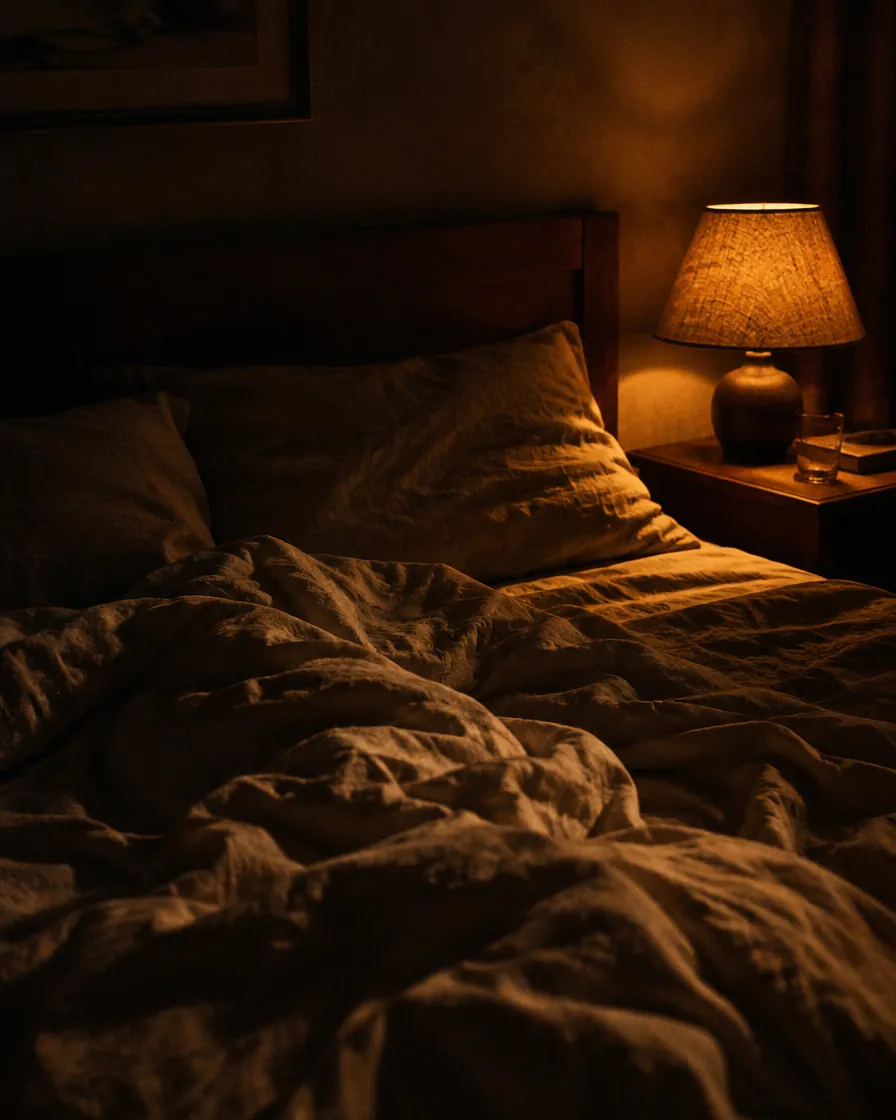
Sleep. You sleep badly even though the mattress is good and the room is quiet. You wake up tired, often at the same time each night. Your sleep got worse after moving house or moving the bed.
Children. A small child keeps drifting to the other side of the cot, presses against the side, ends up lying across it or climbs out and comes to your bed. Children often move away from an unfavourable spot by instinct, so the position you find them in each morning tells you a lot.
Pets. Tradition says dogs avoid such places, while cats are drawn to them and often choose to sleep exactly where it is bad for people. If your cat insists on lying on your pillow or in one corner of the bed, that is an interesting sign.
A cold corner. There is a spot in the room that always feels cooler or uncomfortable, even though the heating works fine. Guests do not sit there, and you never linger there either.
Headaches and tiredness. In one room or at one desk your head always feels heavy and it is hard to concentrate, but it eases once you step outside or into another room.
Plants. Flowers struggle on one windowsill despite enough light and water, then recover when moved elsewhere. In the garden, trees in certain places grow crooked or get sick more often.
A geopathic zone at home: where it usually is
Geopathic zones are not a patch covering a whole room. Most often they are narrow bands, sometimes only half a metre or a metre wide, running through the building regardless of walls and floors. In a block of flats a band can cross every floor in one vertical line, which is why neighbours above and below sometimes complain about the same thing. The least favourable spots are where two bands cross. What matters is not where a zone is in general, but whether it crosses the places where you spend a long time: your bed, a child’s cot, your desk, a favourite armchair. In a hallway or kitchen, where you only pass through, a zone hardly matters. I wrote more about bed placement in a separate article on the bedroom, and about checking a home before moving in in my article on a new home.
It is not only homes. The same bands run through offices, shops and workshops. If everyone at one desk tires quickly or catches colds more often while the people at the next desk feel fine, that is worth noticing too. On a country plot zones matter when choosing where to build a house, a sauna or a gazebo, so it is best to check before construction starts.
Geopathic zones and sleep
Most people come to me because of sleep. That makes sense: we spend a third of our lives in bed, lying still for hours, and the body is at its most open while we sleep. If the bed stands on a zone, a person can sleep eight hours and still get up as if after a hard day. A common clue is that sleep suddenly improves on holiday, at a summer house or at friends’ places, and the old pattern returns as soon as you are home. It also happens that one partner sleeps beautifully while the other tosses and turns, because the band crosses only one side of the bed. In cases like these I look at the bed first, because it is the simplest thing to change and the change is usually felt soonest.
People often ask how long it takes to notice a difference. It varies a lot. Some say after a few nights that they have finally slept properly, others need two or three weeks for the body to recover after a long unfavourable period. If there is no change at all after a month, the cause is most likely something else, and then we keep looking together or I suggest talking to a specialist.
How to find geopathic zones
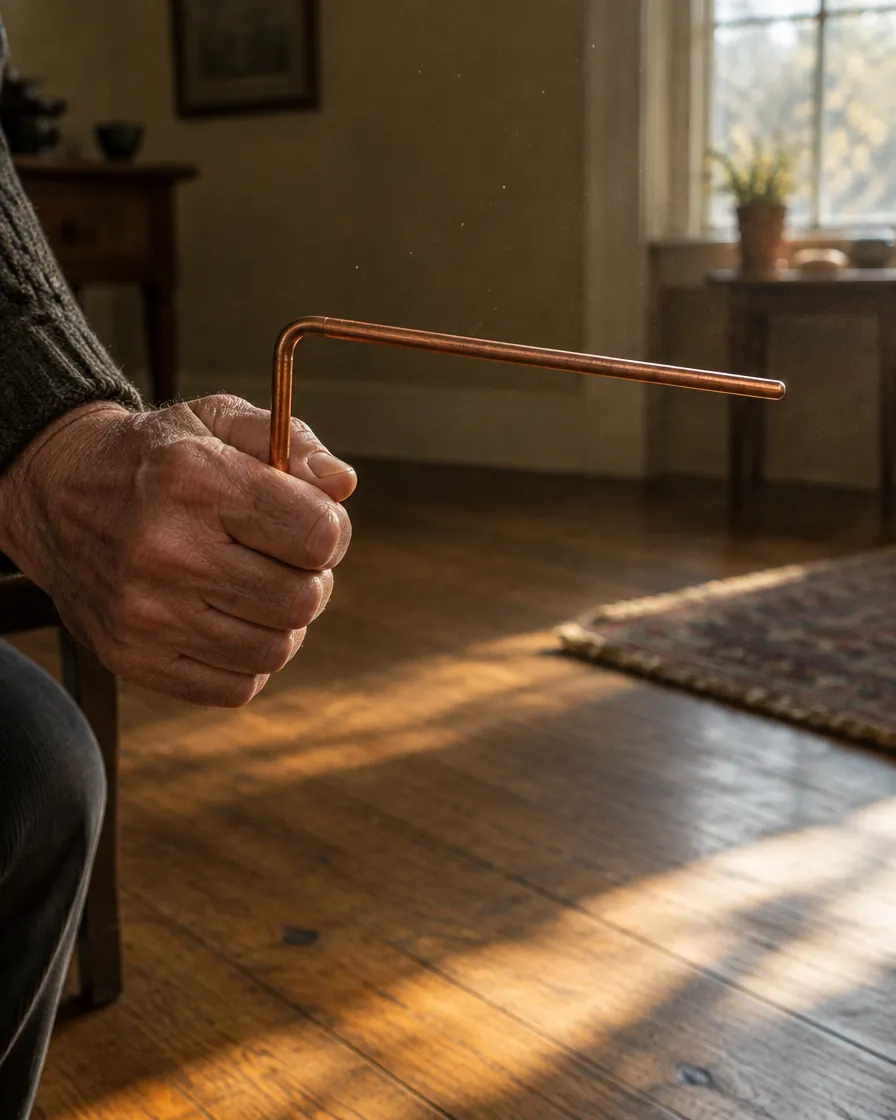
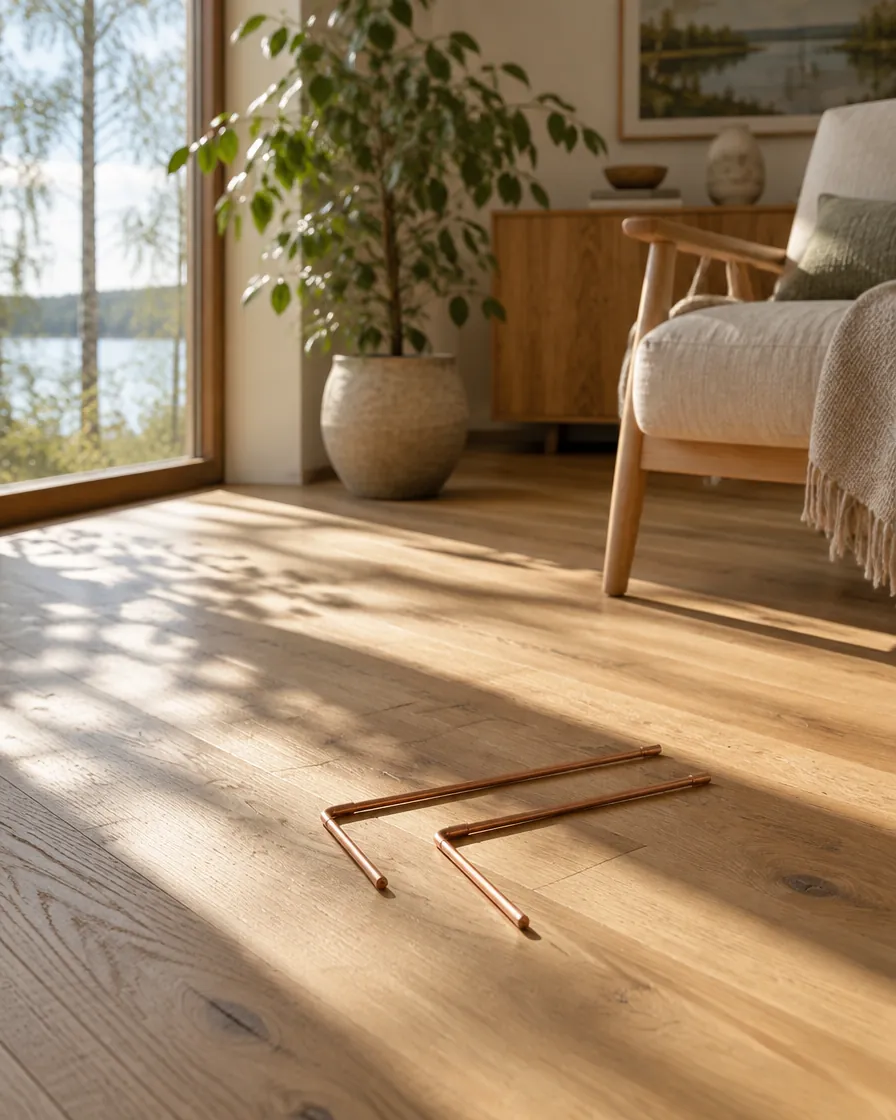
The traditional way is a dowsing rod, a flexible metal or wooden rod that I hold in my hands as I walk slowly through the rooms. Over a zone the rod reacts, and step by step a clear picture forms of where the bands run and where they cross. When I arrive, I first talk with you: what is bothering you, how you sleep, where you spend most of your time. Then I go through all the rooms, not just the bedroom, because zones continue through the whole house. I mark them, show you, and together we work out where to move the bed, the cot or the desk, taking windows, doors and radiators into account. At the end I clear the space of heavy energy. The whole visit takes about two hours. You do not need to prepare anything, just make sure the beds and main furniture are easy to reach.
After the visit you know clearly which places in your home are calm and which are better avoided for long stays. You can rearrange the furniture straight away or gradually, whatever suits you. I recommend keeping a sleep diary for a few weeks after the change so you can see for yourself what shifts. If questions come up, you can always call me.
Gadgets, apps and “meters” sold online do not detect zones. Some people try a rod themselves, and there is nothing wrong with that, but without experience it is easy to confuse the rod’s reaction with your own expectations.
What you can do yourself today
Start by observing. For two or three weeks keep a simple sleep diary: when you went to bed, when you woke in the night, how you feel in the morning on a scale of one to ten. Also note where in the bed you found yourself in the morning.
Compare places. If you can, sleep a few nights in another room or on the sofa and see whether anything changes. If you sleep better elsewhere, that is a meaningful sign.
Move the bed. Sometimes shifting it half a metre or a metre, or turning it to a different angle, is enough. After a change, observe for at least a week, because the body needs time to adjust.
Watch children and pets. If a child keeps drifting to the same edge of the cot, move the cot in the direction the child is pulling.
Look after the bedroom. Air it before sleep, keep a charging phone away from your head and do not store old things under the bed. This helps in any case, and it makes it easier to tell what is really disturbing your sleep.
Most importantly, do not try to rearrange the whole house at once. Make one change at a time and observe. That way it is clear what helped and what did not, and you avoid needless worry. If after a few attempts you still cannot tell where the bed should stand, that is the point where it makes sense to have someone check the zones on site.
Myths about geopathic zones
“Zones are everywhere and you cannot escape them.” There are many bands, but where the bed stands can usually be changed. In almost every home I find calm places.
“A sheet of foil, cork or a special mat will fix it.” Plenty of such products are sold, but I do not trust them and do not recommend them. The simplest and most reliable approach is not to sleep above a zone.
“If you live on a zone, you will definitely fall ill.” This is not true, and nobody should be frightened with words like that. A zone can be one of the causes of tiredness or poor sleep, but it is not a verdict and not an explanation for illness.
“You will have to move house.” Almost never. Usually moving a few pieces of furniture is enough.
Should I see a doctor first about poor sleep?
Yes. If you have slept badly for a long time, often have headaches, or feel constant fatigue or anxiety, please see a doctor first. It could be your thyroid, blood pressure, breathing during sleep or other conditions that need to be checked. Bioenergy complements medicine but does not replace it, and I never promise to cure illness. Checking your space makes sense once health causes have been looked at, or when you want to rule out one more possible factor.
Can my home be checked remotely?
I only identify geopathic zones on site, because I need to walk through the rooms with the rod. Remotely, from a photo, I can work with your own state and energy, and on the phone we decide together whether a visit is worth it. I travel from Kaišiadorys, so Kaunas, Vilnius and the surrounding areas are easy to reach, and we arrange further trips individually.
Do zones ever change?
The main bands usually stay in the same places for many years, so once your home has been checked there is no need to repeat it every year. A new check is worthwhile if you do a major renovation, change what the rooms are used for, or a baby arrives and you need a place for the cot.
Signs of geopathic stress: a short checklist
Check your home against this list. The more signs that match in the same spot, the more it is worth checking:
- you sleep better anywhere other than your own bed;
- you wake up tired despite enough sleep;
- a child keeps sliding to the same edge of the cot at night;
- a cat insists on one spot while a dog avoids it;
- one corner of a room always feels cool or uneasy;
- at a particular desk your head feels heavy and focus is hard;
- plants struggle on one windowsill only.
Where to place your bed: a quick guide
- Check first where you spend the longest: the bed, a child's cot, a desk.
- Avoid spots where two lines cross, especially under your head.
- For couples, watch both partners: if one sleeps worse, a line may cross only their side.
- Keep a sleep diary for two weeks after moving the bed.
- Change one thing at a time so you can see what helped.
- Put the headboard against a wall rather than under a window or next to a radiator, if the room allows.
- Move a child's cot in the direction the child moves towards at night.
If nothing changes after a month, the cause is probably something else and worth looking for further.
How I can help you
If you recognise several of these signs and want to know for sure, give me a call. When you register, tell me what is bothering you and we will arrange a visit. The price of a home check depends on the size and the distance, and I tell you when you register. I speak English, Lithuanian and Russian. My studio is in Kaišiadorys, Gedimino g. 109, next to Rimi, halfway between Kaunas and Vilnius, and for a home check I come to you. Calm sleep often starts with a very simple step.
Frequently asked questions
Start by observing: keep a sleep diary for a few weeks, sleep a few nights in a different spot and compare, and watch children and pets. If you clearly sleep better elsewhere, that is a strong sign. I find zones precisely in person with a dowsing rod, walking through every room and marking the lines on a floor plan.
The most reliable way is not to sleep or sit for long above it. Usually moving the bed or desk by half a metre to a metre is enough. I do not trust foil, cork, special mats or devices and I do not recommend them. Zones do not disappear, but you can choose places that they do not cross.
Science does not confirm their effect, and I say so openly. In my experience a zone can be one of the causes of poor sleep or tiredness, but it does not explain illness and is not a sentence. If your health is getting worse, see a doctor first. Checking a space makes sense once health causes have been looked at.
In folk and dowsing tradition cats like such spots and dogs avoid them. It is an interesting sign but not proof: a cat may choose a spot for warmth, sunlight or your scent. So look at animal behaviour together with other signs, never on its own.
The price of a home check depends on the size of the home and the distance from Kaišiadorys, so I give it when you book and it is clear what is needed. The visit takes about two hours: I walk every room with a dowsing rod, mark the zones, advise where to move furniture and clear the space.
With a dowsing rod I find geopathic zones at home or at work and clear the space of heavy energy. Especially worth it if poor sleep started after a move, or children are restless in a room.
Learn more →