


We spend a third of our lives in bed. How to tell whether yours is in the right place, and what to do if it is not.
Many people come to me because of insomnia, tiredness or anxiety. And very often it turns out that one of the causes is the simplest one of all: the bed is in the wrong place. We spend roughly a third of our lives in bed. If that spot is unfavourable, then every night, instead of resting, the body is under strain, and this builds up over months or even years.
Why the bed in particular
We sit at a desk or on a sofa for a few hours, we move about, change position, get up and leave. In bed we lie for a long time and hardly move, and during sleep the body is at its most open. That is why a geopathic zone under the bed has the strongest effect. A person sleeps for eight hours but wakes up as if they had been working all night. This is often put down to age, stress or the weather, and nobody thinks about the place. Yet it is enough to notice that sleep suddenly improves on holiday or when staying with friends, and the answer starts to become clear.
Signs that your bed is in an unfavourable place
You wake up tired, although you slept long enough. You often wake at night at roughly the same time. Your body shifts by itself to the other edge of the bed or even lies across it. You sleep better in a hotel or at a friend’s than in your own bed. One partner sleeps well while the other keeps tossing and turning. In the mornings you have a heavy head or feel anxious for no reason. None of this is proof, but if you recognise several of these signs, it is worth looking into.
Why simply moving the bed is not always enough
Geopathic zones are not spread evenly across a room. They are bands and the points where those bands cross, sometimes only a couple of steps wide. Move the bed by a metre and you can land in an even worse spot, especially where two bands cross. Also, a couple sleep together, and the spot may be good for one of them but not for the other. Sometimes it is enough to turn the bed or shift it by half a metre, and sometimes the whole bedroom layout has to change. So there is no point guessing; it is better to know exactly.
How I check a bedroom
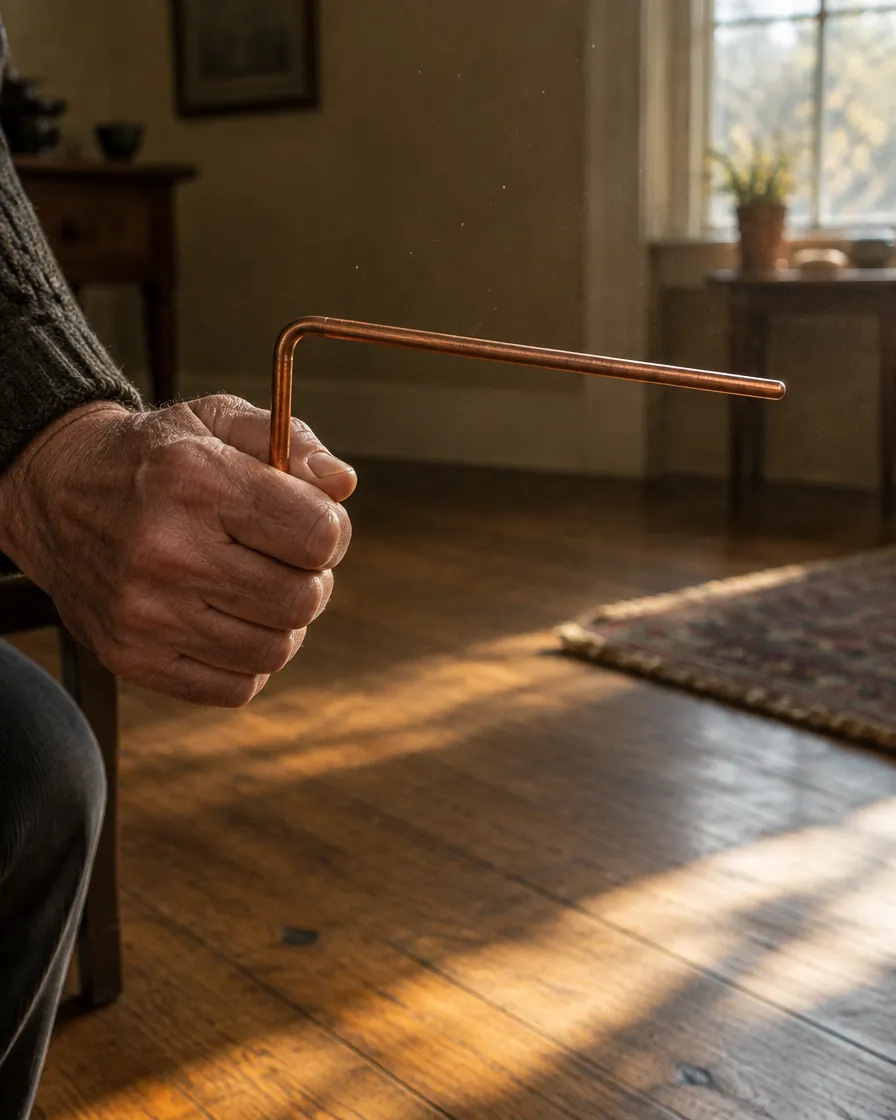
I come and go through the whole bedroom with a dowsing rod to find where the zones run. Then, together with you, we look at where the bed can stand safely, taking into account the layout of the room, the windows, the doors and the radiators. Since I am already there, I usually check the other rooms as well, especially the children’s room. The whole job takes about two hours. Until we meet, keep a note for a few weeks of how you slept and how you feel in the morning. If you can, sleep in another room for a while and compare. Do not keep phones charging next to the bed, and air the bedroom before you go to sleep. If insomnia has lasted a long time, be sure to talk to a doctor as well, because the position of the bed is one possible cause, but not the only one.
Not just the zones
The overall atmosphere of the bedroom matters too. Do not overload it with things, do not keep old boxes of things you no longer need under the bed, and do not work on a laptop in bed. A mirror directly facing the bed makes it harder for some people to settle. The simpler and calmer the bedroom, the easier it is to rest there. Change and air your bedding often, and a mattress that someone slept on for a long time while ill or in deep grief is better replaced with a new one. These are simple things that keep the space clean.
Let’s check
If you suspect you are sleeping in the wrong place, give me a call. The first phone conversation is free, and we will arrange a visit at a time that suits you.
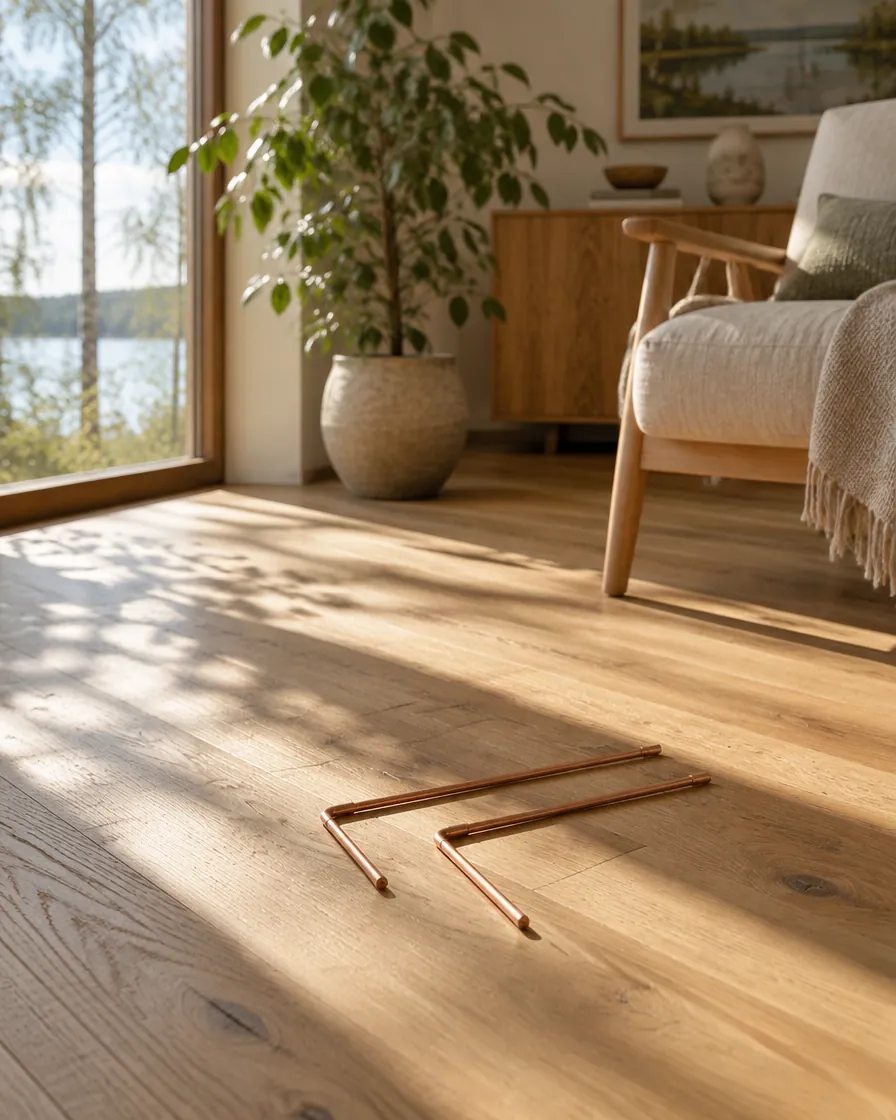
With a dowsing rod I find geopathic zones at home or at work and clear the space of heavy energy. Especially worth it if poor sleep started after a move, or children are restless in a room.
Learn more →